For me, as I look back on the roads I have travelled and the crossroads that I deliberated over, fate and destiny, no suprise, have emerged as intertwined. One is not the master of the other. They are instead two sides of one coin.
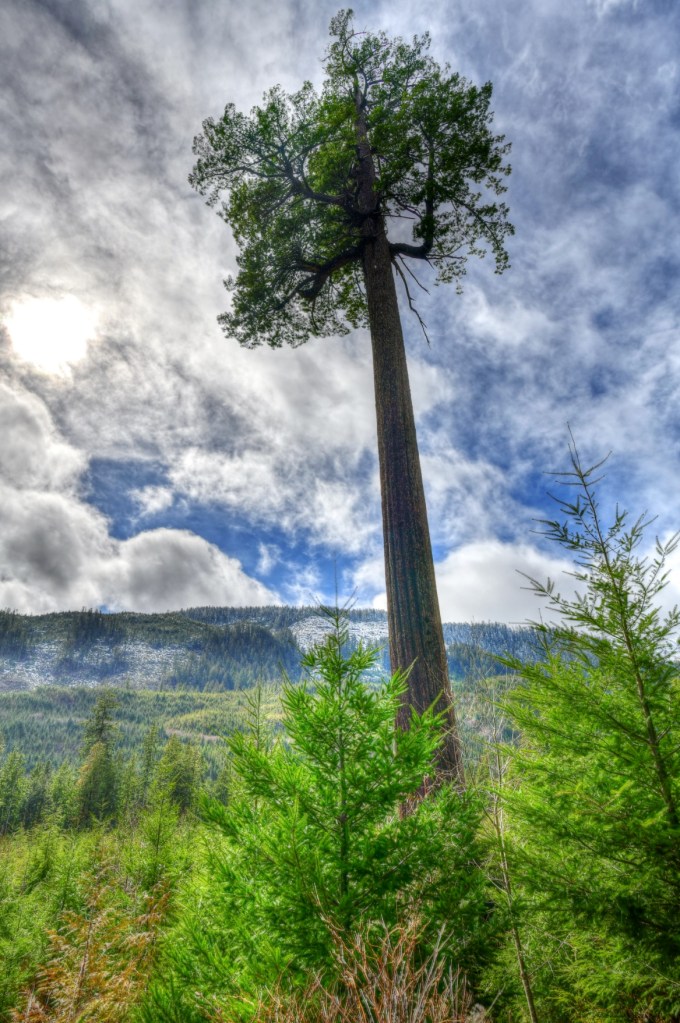
To me, fate is the core of a Douglas Fir – its roots and spiralling trunk, something I can embrace but never control. More like a river of events that I swim in.
Destiny, on the other hand, is the limb of the fir near her crown. An ever evolving collection of events that I created and then influenced, but with the recognition that they owe their origin to the trunk and roots of the tree.
1. Fate as Root and Trunk: The Given Flow
In this framing, fate isn’t an external puppet master but an ontological substrate — the deep taproot of being and the spiral of the trunk rising through time. I perceive it as a “river of events I swim in.” This corresponds to what the Greeks meant by moira — one’s portion or allotment in the order of existence. Fate is the givenness of things: the family, the century, the planet, and the body one is born into.
The spiral of the trunk also suggests evolution. While I can’t alter the pattern of its growth, I can move with its rhythm, just as a swimmer aligns with the current rather than resists it. Fate, therefore, isn’t static but dynamic — a living necessity.
In this view, to know fate is to recognize my rootedness in the world’s unfolding story — what the Stoics called the logos or rational order of nature. It’s the deep grain of existence, invisible yet omnipresent.
2. Destiny as Branch and Crown: The Reach of Agency
By contrast, destiny is the emergent structure that fate nourishes — the crown of the Douglas Fir stretching into sunlight. Here, my agency, imagination, and creativity will take form. These branches are not arbitrary; they grow in harmony with the trunk’s spiral, yet each limb still finds its own angle of light.
Destiny is therefore not separate from fate but expressive of it. It’s the realization of the potentials latent in fate’s structure. To borrow from Aristotle: fate is the potential, destiny the actualization. In Jungian language, fate is the archetypal pattern; destiny is its individuation within a life.
When you shape your choices, craft art, or alter your course through reflection, you are growing those branches — yet always drawing nutrients from the same roots.
3. Interplay: The Living Symbiosis of Root and Crown
The comfort I take from this metaphor lies in its ecological realism. A fir’s crown influences its roots: transpiration draws water upward, photosynthesis feeds sugars back down. In the same way, destiny can transform the experience of fate. Our awareness, actions, and creative contributions don’t cancel our fate but enrich its meaning.
In this cyclical exchange, the boundary between passive acceptance and active creation dissolves. The river of fate and the swimmer’s stroke become one movement — a co-creative flow between necessity and freedom.
This synthesis echoes the insight of the Roman poet Terence:
“Fortune favours the prepared mind.”
Destiny is not about defeating fate but collaborating with it — giving shape to what was always possible.
For a 12 minute deep dive into this post in podcast format, created by Google’s NotebookLM AI, click on the audio player below.
Source Image CC BY 4.0
About this image.
Photo credit: Me
Date: March 24, 2023
Ten km north of Pt. Renfrew on the west coast of Vancouver, Island, Canada you’ll find one of the largest Douglas Fir trees in the world. The 1,100 year old tree, affectionately named Big Lonely Doug, is one of the three largest Douglas Firs in Canada and was, thankfully, spared during a clear-cutting operation of the area in 2011.
I visted the region, a challenging off-road adventure for my all-wheel-drive SUV, during the spring of 2023. Twelve years after the forest surrounding this majestic mother tree had been cleared. I was expecting a view of heart wrenching tragedy that would reflect back humanities indifferance to nature. Instead, I found a twelve year old second growth forest in full recovery cuddled up to this iconic, and still going strong, mother tree.
Big Lonely Doug wasn’t as lonely as I’d feared. I cried anyway.
 The Sorcerer's Apprentice
Leave a comment